
DuPage County Divorce Decree Search
DuPage County divorce decree records are maintained by the Circuit Court Clerk in Wheaton, one of the busiest circuit courts in Illinois, serving a county of nearly one million residents in the 18th Judicial Circuit. Whether you need to search for a past dissolution of marriage case, get a certified copy of a final decree, file a new divorce petition, or verify that a divorce occurred through the state's vital records office, this guide covers every step of the process for DuPage County.
DuPage County Quick Facts
DuPage County Circuit Clerk Office
Candice Adams serves as the Circuit Court Clerk for DuPage County. The clerk's office in Wheaton is the central repository for all civil and domestic court filings in DuPage County, including every dissolution of marriage case ever filed in the 18th Judicial Circuit. This is the only office that can issue certified copies of divorce decrees filed in this county.
| Office | DuPage County Circuit Court Clerk |
|---|---|
| Address | P.O. Box 707, Wheaton, IL 60187-0707 |
| Phone | (630) 407-8700 |
| Fax | (630) 407-8575 |
| County Website | www.dupagecounty.gov |
| Circuit Clerk | www.dupageco.org/CircuitClerk |
The clerk's office is open Monday through Friday during standard business hours. Given the volume of cases in DuPage County, arriving early or calling ahead can save you time. Mail requests are accepted. Include the names of both parties, the approximate year of the divorce, your photo ID information, and a check or money order made out to the DuPage County Circuit Clerk. A self-addressed stamped envelope helps ensure you receive your documents promptly.
Searching Divorce Records Online
DuPage County is covered by the re:SearchIL portal, which provides statewide case search access and in some instances allows users to view scanned documents. This is one of the most direct online tools for finding DuPage County divorce case records. You can search by name, case number, or filing date.
Judici.com also covers DuPage County and is free to use. Search results show basic case information including filing dates, case status, and hearing history. Neither tool provides the full text of a decree, but both can give you the case number you need to request a certified copy from the clerk.
The DuPage County Circuit Clerk's website at dupageco.org/CircuitClerk may also have access links to online search tools and general information about requesting records. Check there first for any updates to the process.
Note: Some older DuPage County cases may not be fully indexed in online systems. For records going back more than 20 to 30 years, a phone call or in-person visit to the clerk is the most reliable approach.
Getting a Certified Copy of a Decree
A certified copy of a divorce decree is a court-stamped document that carries legal authority. Government agencies, courts in other states, lenders, and many other institutions require certified copies rather than plain reproductions. Only the DuPage County Circuit Clerk can issue certified copies of decrees filed in this county.
Call (630) 407-8700 before visiting to confirm the current fee schedule and what identification you need to bring. Fees are assessed per page plus a certification charge. Payment in person can typically be made by check, money order, or in some cases credit card. For mail requests, use a check or money order only.
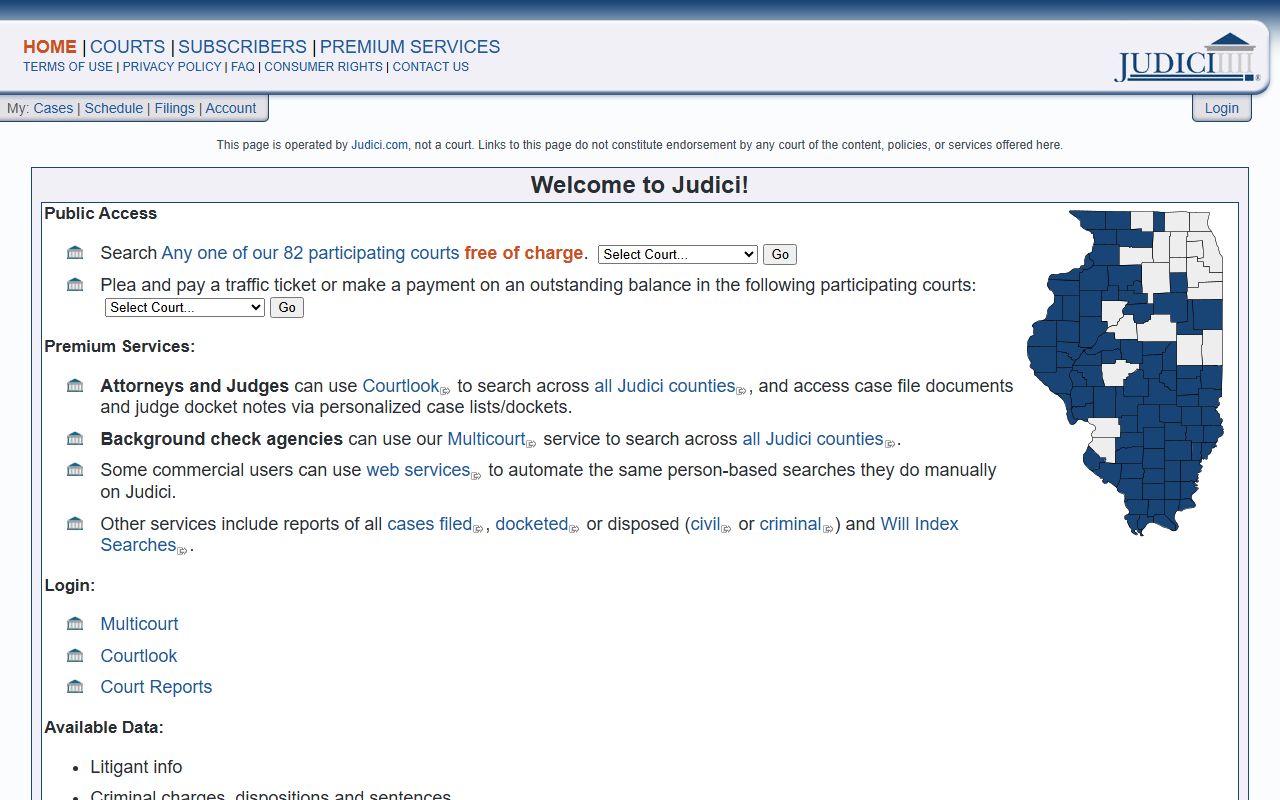
DuPage is a large county with a high volume of filings. Having the case number in hand when you contact the clerk's office will significantly speed up the process. Use Judici or re:SearchIL first to find the number if you don't already have it.
E-Filing in DuPage County
DuPage County is fully integrated with Illinois mandatory e-filing. Since July 1, 2018, attorneys filing divorce cases in Illinois have been required to use the eFileIL system. Self-represented parties may also use eFileIL for their filings. The system accepts new petitions, responsive pleadings, financial affidavits, and most other documents filed in domestic cases.
If you are filing without an attorney in DuPage County, check with the clerk's office about any specific local rules for domestic filings. DuPage is one of the larger circuits, and they may have specific procedures for self-represented parties beyond what is standard statewide.
The Illinois Courts standardized forms page has all the approved forms you need for a divorce filing, including petitions, financial disclosures, and final judgment orders. These are free to download and use.
Residents of Aurora, Naperville, and Bolingbrook
Several large cities in DuPage County span county borders. If you live in Aurora, Naperville, or Bolingbrook, your divorce records may be in DuPage County or in a neighboring county depending on your exact address at the time of filing.
Aurora spans both DuPage and Kane counties. If you lived in the Aurora zip codes west of DuPage, your records may be in Kane County. Naperville sits mostly in DuPage but extends into Will County. Bolingbrook also crosses into Will County. If you are unsure which county has your records, start with a Judici or re:SearchIL search using your full name. The search results will show the county where the case was filed.
You can also call the DuPage County Circuit Clerk at (630) 407-8700. If your records are not in DuPage, the staff may be able to suggest where to look next. Alternatively, try the Kane County or Will County circuit clerk offices if your address at the time of filing was in those counties.
Joint Simplified Dissolution Option
Illinois law allows couples who meet certain requirements to use the Joint Simplified Dissolution of Marriage process under Sections 452 and 453 of the Illinois Marriage and Dissolution of Marriage Act (750 ILCS 5/). This simplified process is designed for marriages that did not last long, where neither party has significant assets or debts, and where no children are involved.
Both spouses must agree. Neither can have significant retirement accounts, real estate, or debts over a certain threshold. The marriage must have lasted less than eight years in most cases. If your situation qualifies, the simplified process is faster and less expensive than a standard contested or uncontested dissolution.
Ask the DuPage County Circuit Clerk about the specific forms and steps for the simplified process. The standardized forms on the Illinois Courts site include the documents needed for this option as well.
Note: Even in a simplified dissolution, the final decree is filed with and kept by the DuPage County Circuit Clerk, just like any other dissolution judgment.
State Verification and Illinois Law
The Illinois Department of Public Health maintains a statewide index of dissolutions from 1962 to the present. A verification letter from IDPH confirms a divorce occurred in Illinois but does not include decree terms. The fee is $5 and mail processing takes four to six weeks. Contact IDPH at 925 E. Ridgely Ave., Springfield, IL 62702-2737, or visit the IDPH dissolution of marriage records page.
Divorce law in Illinois is grounded in 750 ILCS 5/. A 90-day residency requirement applies before filing. Irreconcilable differences is the only grounds for divorce in Illinois. Six months of continuous separation creates an irrebuttable presumption of irreconcilable differences. Court records access is governed by 735 ILCS 5/, which makes most civil filings public record.
Legal Help for DuPage County Residents
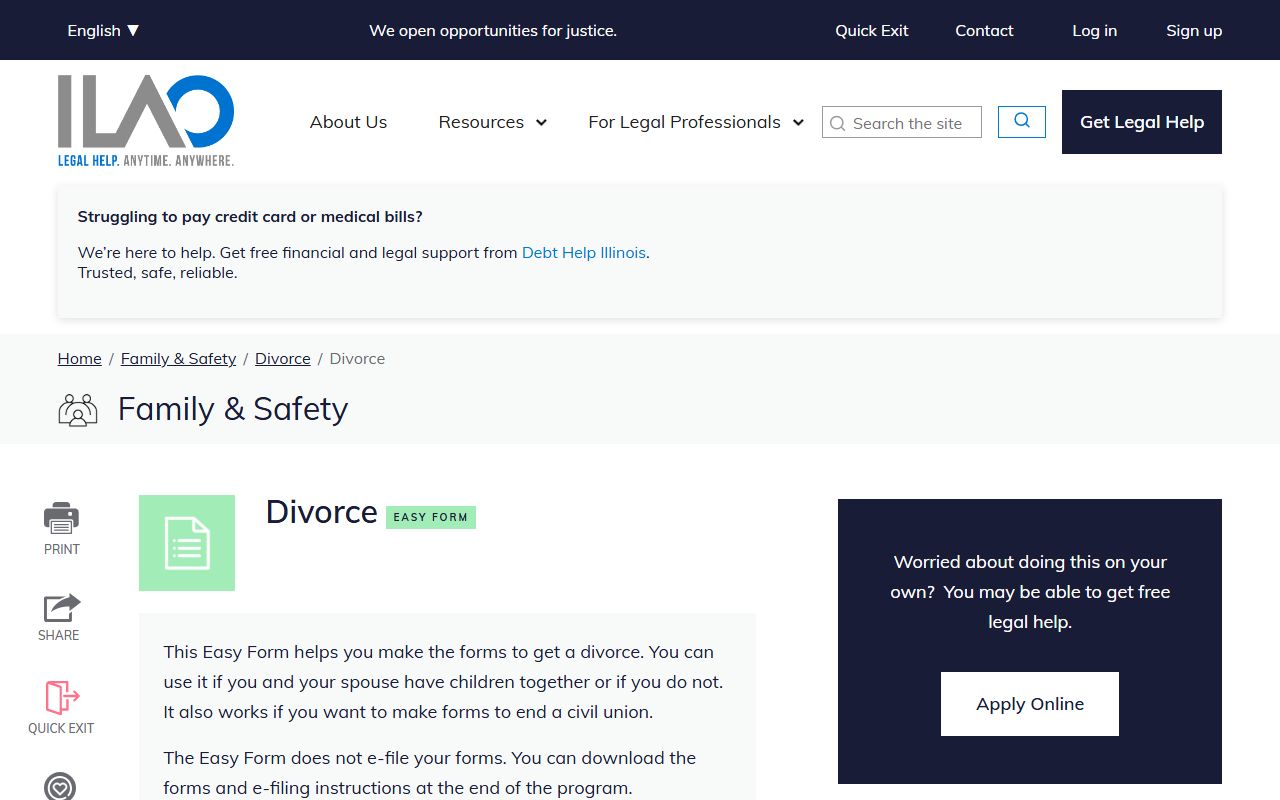
Illinois Legal Aid Online is a strong starting point for anyone who needs guidance on divorce in DuPage County. The site covers the full process, from residency requirements to property division and parenting plans. It also helps you find legal aid organizations that serve DuPage County if you qualify based on income.
The Illinois Courts Circuit Clerk directory has contact details for all 102 county clerk offices. If you need records from outside DuPage County, this is the best reference for finding the right office quickly.
Cities in DuPage County
Several cities in DuPage County have their own pages with local filing information and courthouse details.
Nearby Counties
If the divorce was filed while a party lived in an adjacent county, records will be there instead. Check these neighboring county clerks.