
Find Illinois Divorce Decree Records Online
Illinois divorce decree records are held by the circuit court clerk in the county where the dissolution of marriage was granted. You can search most Illinois divorce records through Judici.com, which covers 82 of the state's 102 counties, or by contacting the county clerk directly. The Illinois Department of Public Health handles verifications of divorce facts but does not issue certified copies of any divorce decree. This page explains where to search, how to request records, and what sources cover dissolution of marriage cases across Illinois.
Illinois Divorce Decree Quick Facts
Where to Find an Illinois Divorce Decree
Two offices handle divorce records in Illinois. The Illinois Department of Public Health (IDPH) keeps a statewide index of dissolution of marriage records going back to 1962. They can verify the basic facts of a divorce: the names of both parties, dates of birth, the date the divorce was granted, and the city or county where it occurred. IDPH does not issue certified copies of any divorce decree. Verifications cost $5 each and can be requested by mail, fax, or in person. Mail requests take 4 to 6 weeks on average. Send your request to IDPH Division of Vital Records, 925 E. Ridgely Ave., Springfield, IL 62702-2737, or call (217) 782-6554.
For a certified copy of the full divorce decree, you must go to the Circuit Court Clerk in the county where the case was filed. That office holds the complete case file, including the original petition, any motions, temporary orders, the final judgment, and all other papers filed during the case. Each of the 102 counties in Illinois has its own clerk. These offices set their own fees and procedures. Records go back to the founding of each county.
The IDPH will return your request without processing if your photo ID is expired, not readable, or not included. Do not send cash. Only checks or money orders payable to "Illinois Department of Public Health" are accepted. Keep a copy of everything you send.
The IDPH Division of Vital Records page covers the full process for requesting a dissolution of marriage verification in Illinois, including what to submit and where to mail your request.
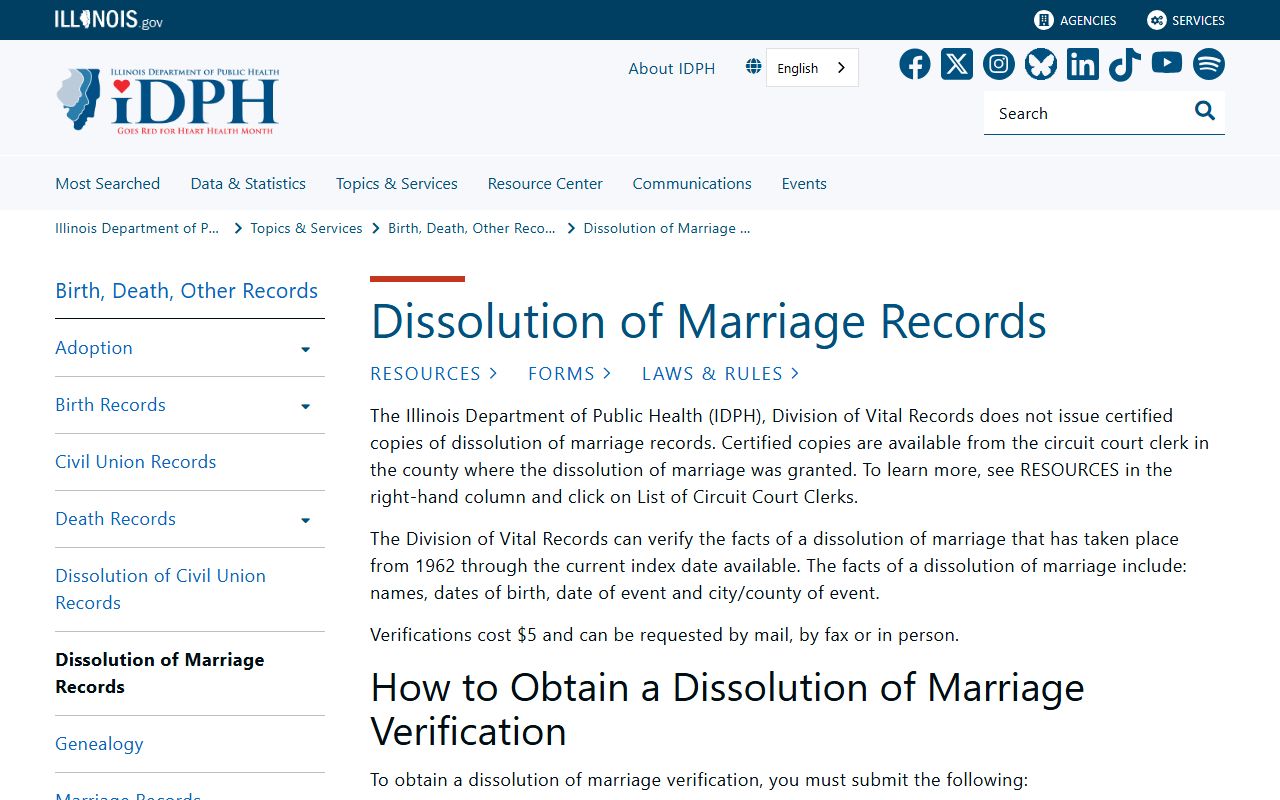
IDPH records cover divorces from 1962 through the current index date. For older dissolution of marriage cases, you must contact the county circuit clerk directly.
Search Illinois Divorce Records Online
Judici.com is the most useful free tool for finding Illinois divorce cases. It covers 82 of the state's 102 counties and gives public access to case information. You can search by name or case number and get filing dates, hearing dates, and docket entries. Full document images are often not available online. But you can confirm whether a case exists and get the detail you need to contact the right clerk. The system is not real-time, so very recent filings may not appear right away.
The Judici court records search provides free access to circuit court data from most Illinois counties, including dissolution of marriage and divorce decree case filings.
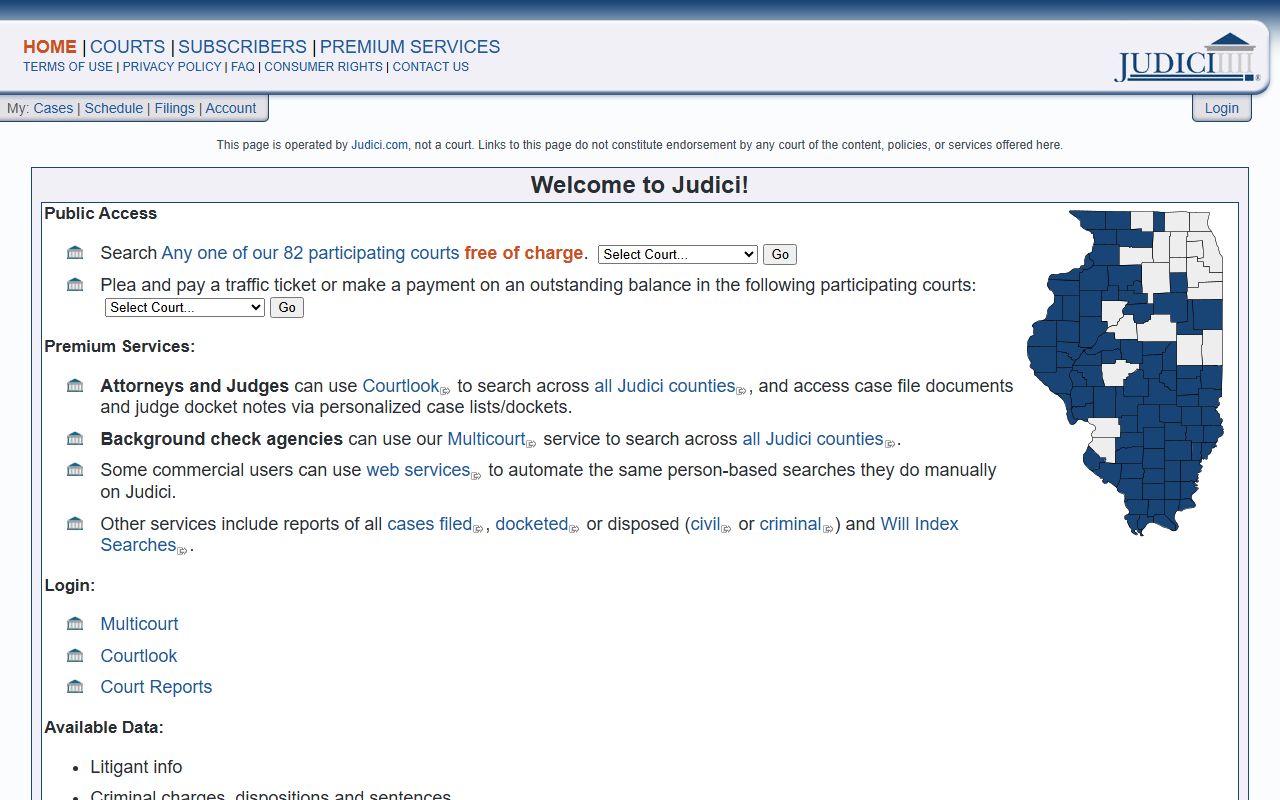
Judici draws data from county case management systems. Some counties may have a lag between when a file is submitted and when it shows up in the public search.
re:SearchIL offers cross-county access to electronic court records for Illinois counties that use the Tyler Technologies Odyssey platform. You can search across multiple counties in one query rather than checking each county one at a time. Some document downloads carry a small fee through the portal.
The re:SearchIL portal gives users cross-jurisdictional access to Illinois circuit court records, connecting to county systems that use the Odyssey case management platform.
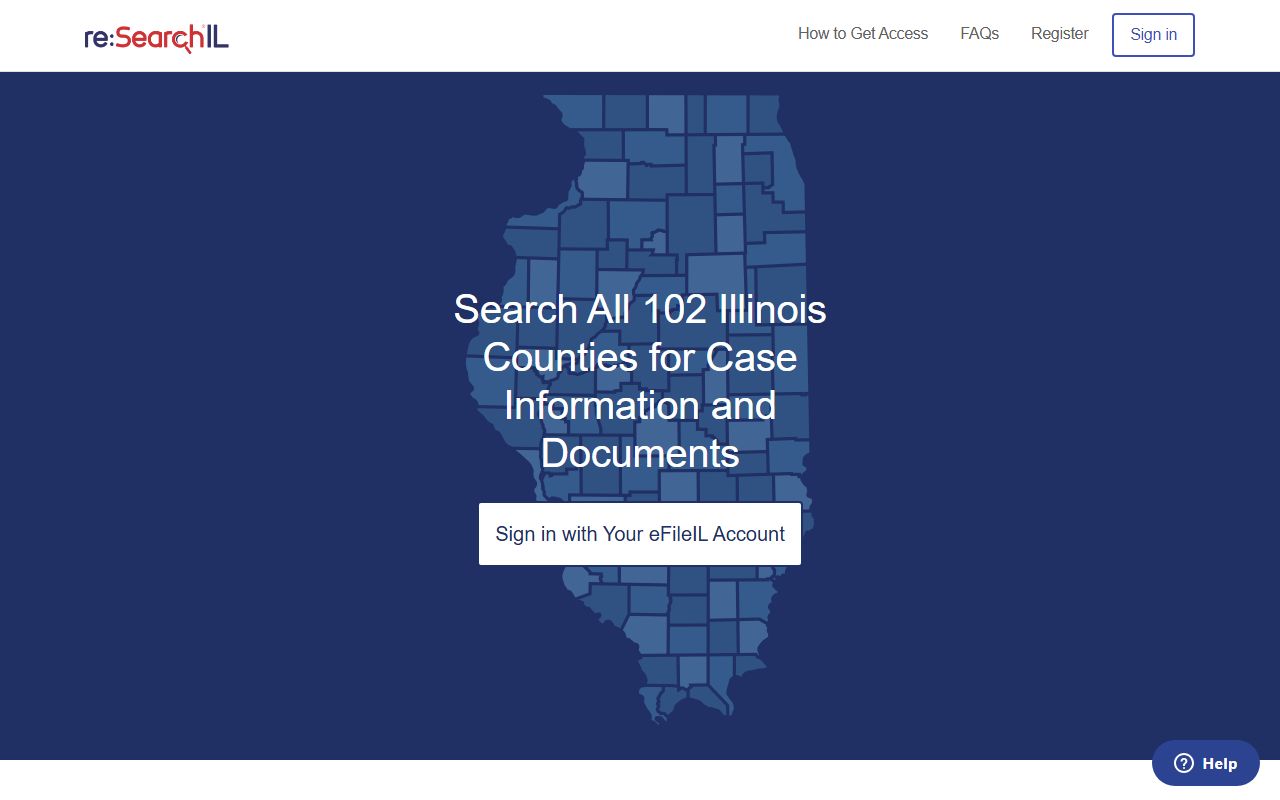
re:SearchIL is operated by Tyler Technologies and connects directly to county case management systems, pulling case-level data for divorce and other civil filings in Illinois.
Cook County has its own online case search tool through the Clerk of the Circuit Court at cookcountyclerkofcourt.org. Cook County is by far the largest jurisdiction in Illinois. It covers Chicago and all surrounding municipalities within the county. The system includes civil, domestic relations, probate, and traffic records. Cook County made e-filing mandatory on July 1, 2018, so all recent dissolution of marriage records were submitted electronically and are indexed in its online system.
Illinois Divorce Decree vs. Dissolution Verification
A divorce decree and a dissolution verification are two different things. The decree is the full court order signed by a judge at the end of the case. It sets out the terms of the property split, any custody and support orders, and any maintenance awards. This document lives in the case file at the circuit court clerk's office. It is a public record anyone can request. Most legal matters require the full divorce decree, not a short summary.
A verification from IDPH is a brief document. It confirms only that a dissolution of marriage took place and lists the basic facts: names, dates of birth, event date, and the county or city. It does not include property terms, custody orders, or any other settlement details. Many people need only a verification to prove they are divorced, such as when updating certain personal records or changing a name in Illinois.
Illinois Dissolution of Marriage Laws and Divorce Decree Rules
The main law that governs divorce in Illinois is the Illinois Marriage and Dissolution of Marriage Act, 750 ILCS 5/. Under Section 401, the only ground for divorce in Illinois is irreconcilable differences. Illinois moved away from fault-based grounds in 2016. The court must find that irreconcilable differences have caused the irretrievable breakdown of the marriage and that reconciliation is not in the best interests of the family. Section 401(a)(2) adds that living apart for at least six months before the judgment is entered creates an irrebuttable presumption that this standard is met. This makes the process more straightforward for most couples who have been separated for half a year or more.
The Illinois Marriage and Dissolution of Marriage Act (750 ILCS 5/) is the core statute that governs how divorce petitions are filed, how cases proceed, and what a final divorce decree must contain in Illinois courts.
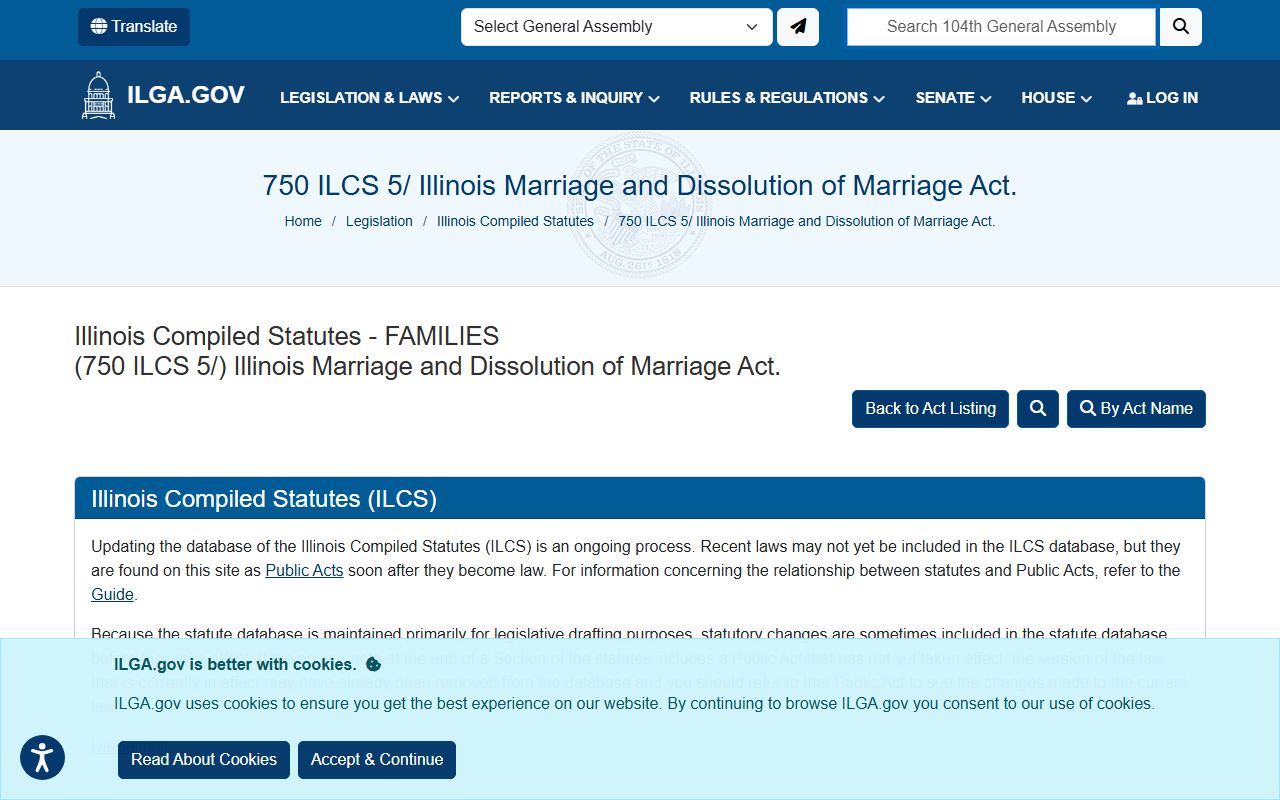
Section 104 of the Act sets venue. You file in the county where either spouse currently lives. At least one spouse must have lived in Illinois for 90 days before the case begins.
Joint Simplified Dissolution is an option for couples who qualify under Sections 452 and 453 of the Act. Both parties must appear together. Cases are heard the same day they are filed in counties that offer this. Cook County runs same-day hearings at Room 802, Richard J. Daley Center, 50 West Washington St., Chicago. Both parties must bring photo ID and cash or a money order. Requirements include a short marriage, no children, and limited combined assets.
The Vital Records Act, 410 ILCS 535/, defines dissolution of marriage as a vital record in Illinois and establishes the rules under which IDPH can verify divorce facts. Under Section 25, the State Registrar can search dissolution records and issue verifications upon receipt of a written request and the required fee. This is the legal basis for IDPH's $5 verification service that has been available since 1962.
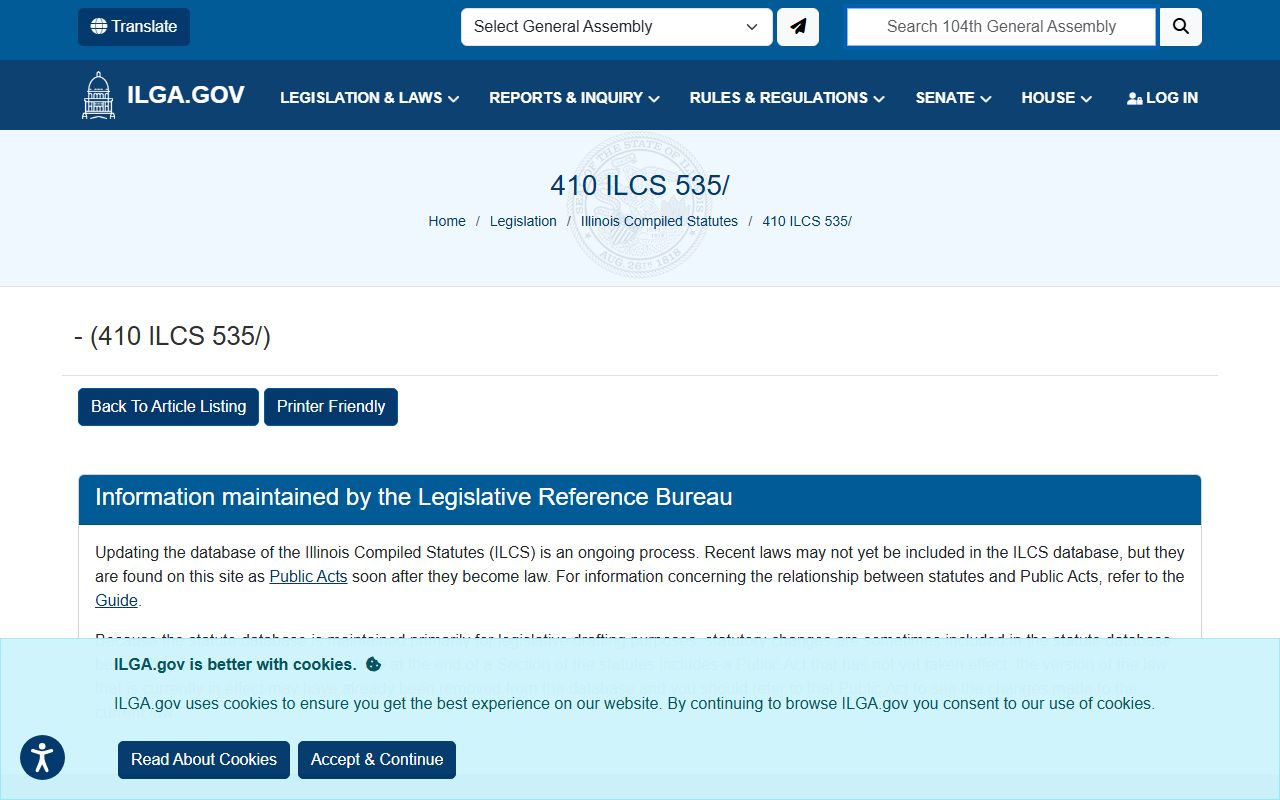
The Vital Records Act defines vital records to include births, deaths, fetal deaths, marriages, and dissolutions of marriage in Illinois.
The 77 Ill. Adm. Code 500 implements the Vital Records Act and sets the administrative rules that IDPH follows when processing divorce verification requests. It defines who can request a verification, what documents must be submitted, and what happens when a request does not meet the requirements.
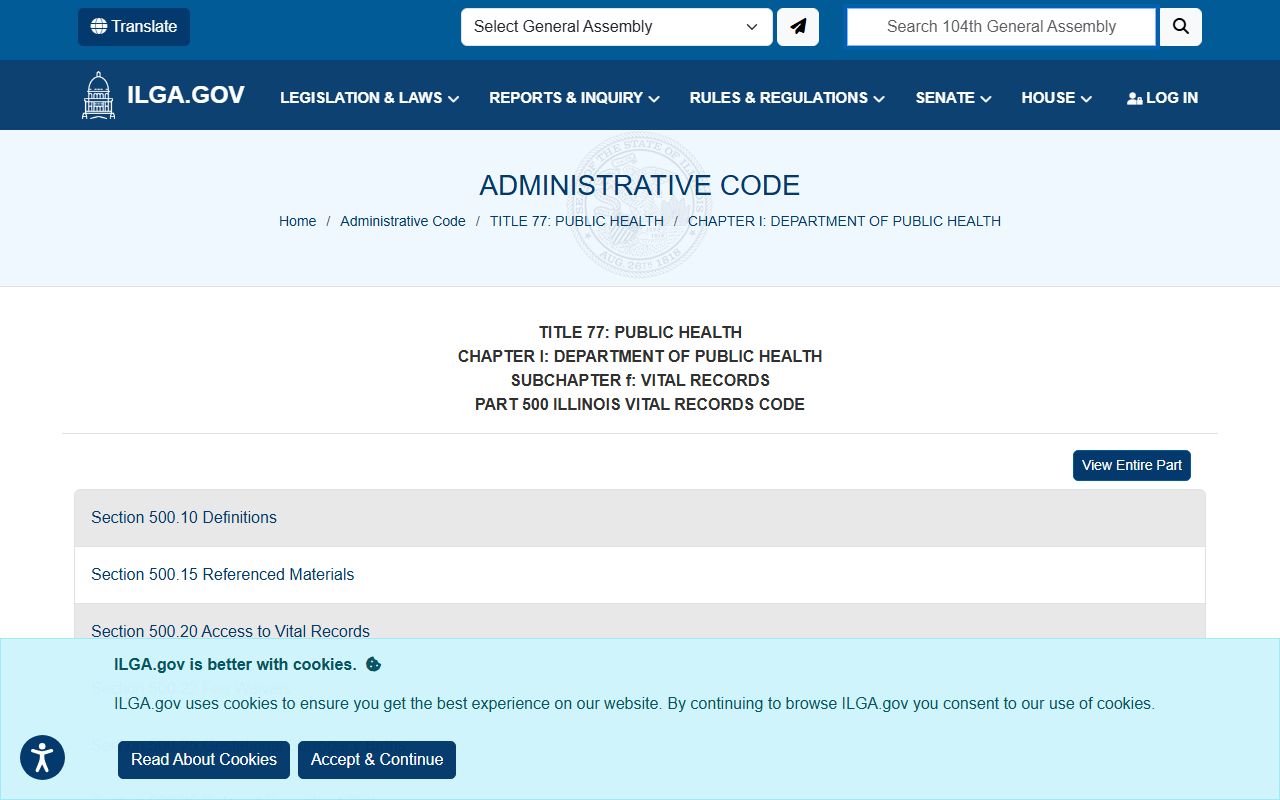
This code applies directly to IDPH's handling of dissolution of marriage verification requests from the public in Illinois.
The Code of Civil Procedure, 735 ILCS 5/, governs how court records are accessed in Illinois. It applies to all civil case files, including divorce decrees held by circuit court clerks. This statute sets the legal framework for public requests for court documents. It works alongside the recordkeeping manual to define what rights the public has to see and copy dissolution of marriage case files in Illinois courts.
The Code of Civil Procedure applies to all 102 circuit courts in Illinois and governs every request for copies of divorce decree files.
E-Filing Illinois Divorce Cases
E-filing is mandatory for all civil cases in Illinois as of July 1, 2018. This includes every dissolution of marriage filing across all 102 counties. Both attorneys and self-represented filers must submit through an approved electronic filing service provider. The state manages the main portal at efile.illinoiscourts.gov. Several certified providers are available. E-filing support is available at (800) 297-5377 or by emailing efiling.support@tylertech.com. Paper filings are no longer accepted for most civil cases in Illinois.
The eFileIL portal is the official state-managed electronic filing system for divorce cases and all other civil filings submitted to Illinois circuit courts.
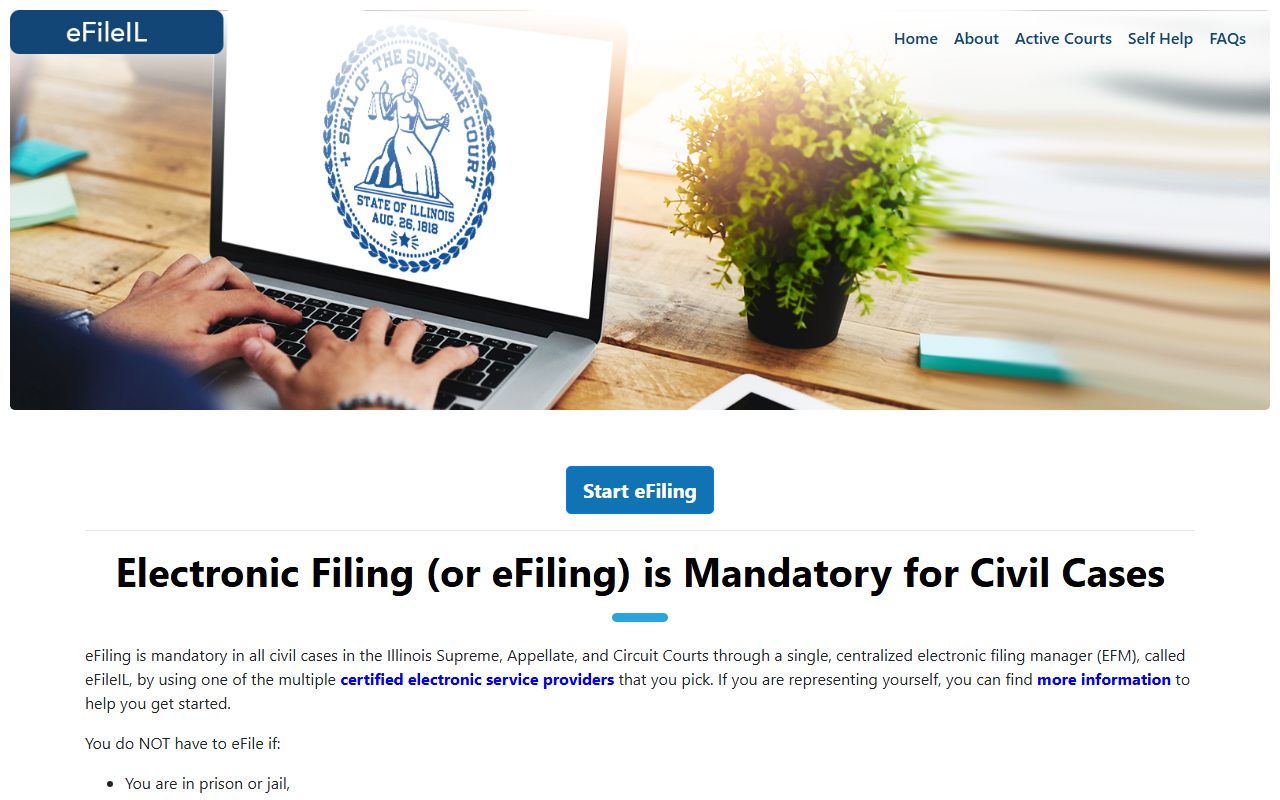
eFileIL is run through a partnership with Tyler Technologies and serves all Illinois circuit courts that participate in the statewide e-filing program.
The eFile Illinois portal via Tyler Technologies is one of the certified platforms used to submit dissolution of marriage petitions and other civil documents to Illinois circuit courts.
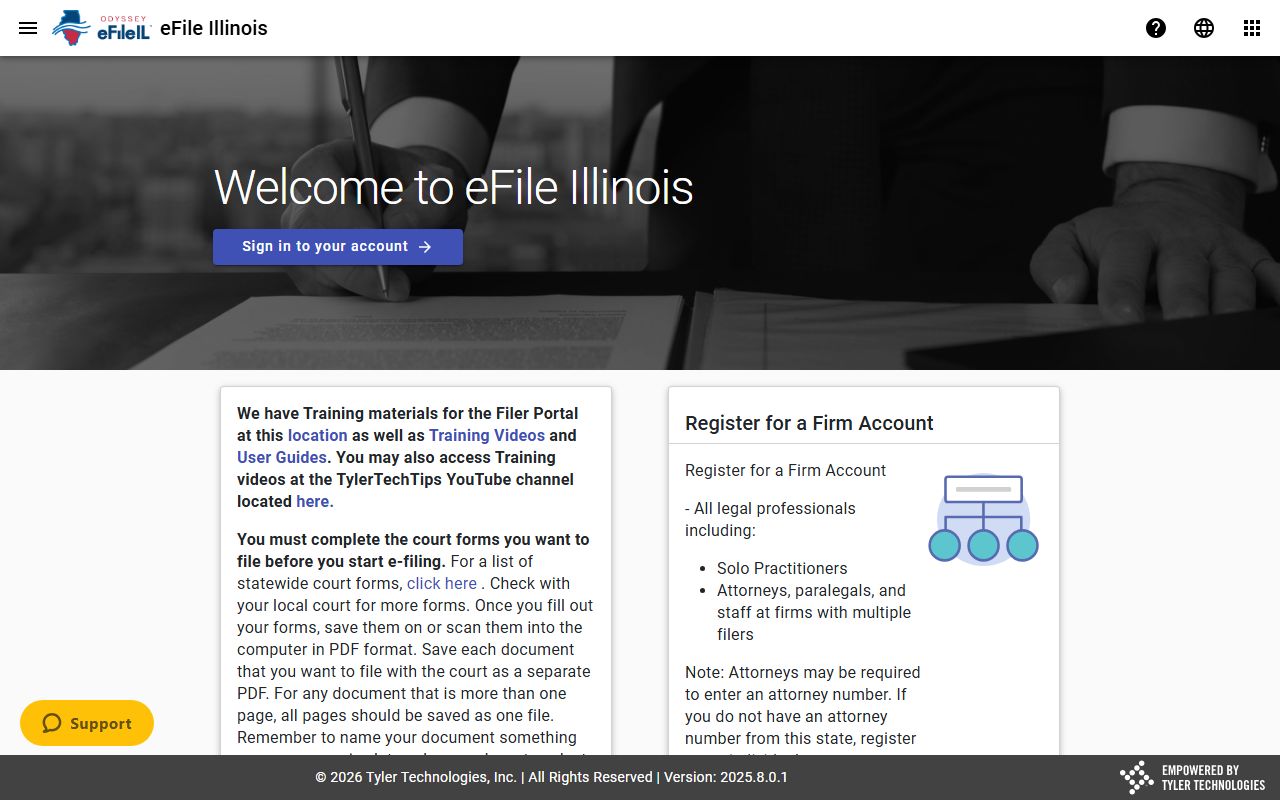
After filing, you can track case status and receive court notices through the e-filing system as your Illinois dissolution of marriage case moves forward.
How to Get a Certified Copy of a Divorce Decree
Getting a certified copy of a divorce decree in Illinois starts with finding the right county clerk. You must request from the clerk in the county where the divorce was granted, not where you live now. If you do not know which county handled the case, search Judici.com or re:SearchIL first. Once you locate the case, note the county and case number. Then contact that county's Circuit Court Clerk. Most clerks take requests in person, by mail, or through an authorized agent. Fees vary by county, so call ahead to confirm the current rate and accepted payment forms before you go.
Cook County is the largest divorce records jurisdiction in Illinois. The Clerk is Mariyana T. Spyropoulos. The main office is at 50 W. Washington, Suite 1001, Chicago, IL 60602-1305, phone (312) 603-5030, fax (312) 603-4557. Certified copies of divorce judgments are available from Room 802, Richard J. Daley Center, 50 West Washington St. Office hours are 8:30 a.m. to 4:30 p.m., Monday through Friday. Bring cash or a money order payable to the Clerk of the Circuit Court. A fee is charged for each certified copy of any court judgment in Cook County.
The Cook County Clerk of the Circuit Court handles all dissolution of marriage records for Cook County, the most populous county in Illinois, covering Chicago and surrounding communities.
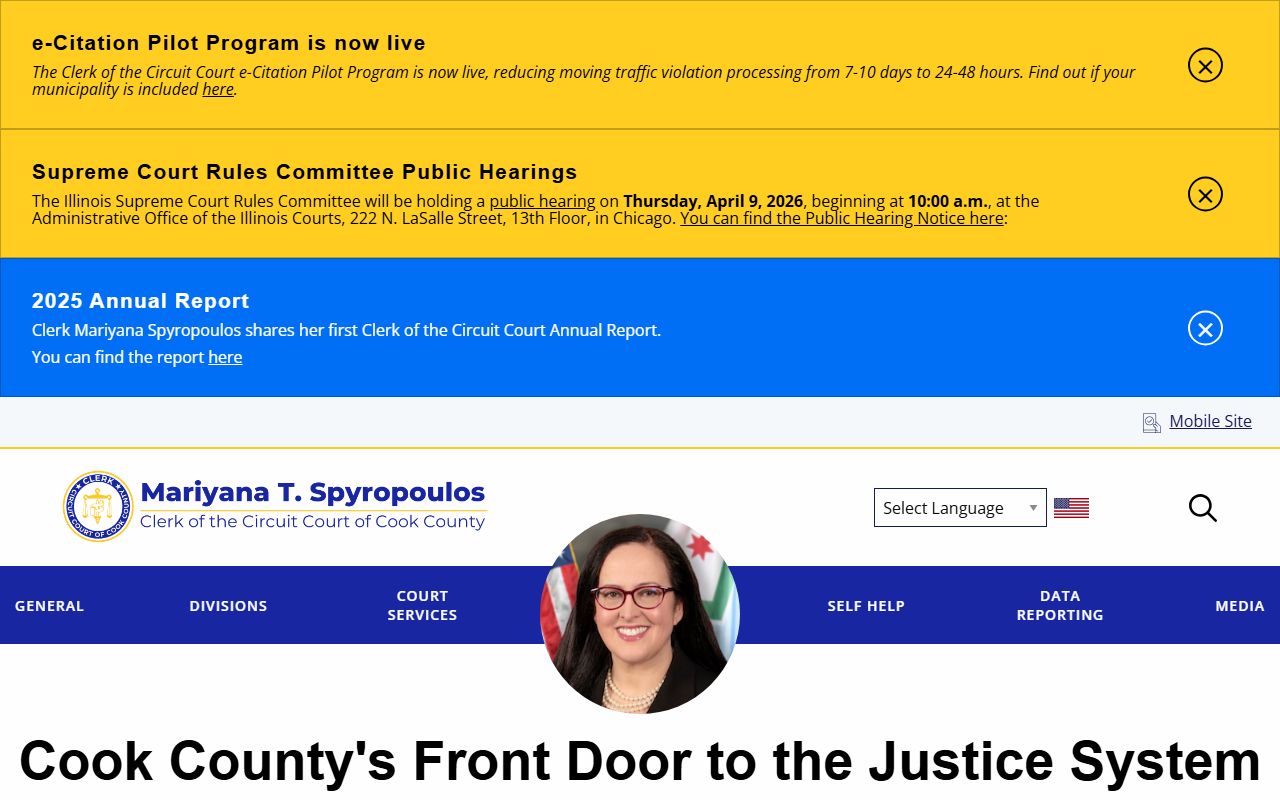
Cook County also offers an online case search tool for civil and domestic relations records, making it possible to find divorce decree case information without visiting the office.
Viewing court records online or on a courthouse terminal is usually free. Printed copies cost money, and the amount depends on the county. Certified copies, which carry an official stamp and clerk signature, cost more than plain copies. Make sure you are on an official government website, which usually ends in .gov, when searching for court records in Illinois.
The Illinois Legal Aid Online guide on getting court records explains step by step how to request copies of divorce decree documents from circuit court clerks across Illinois.
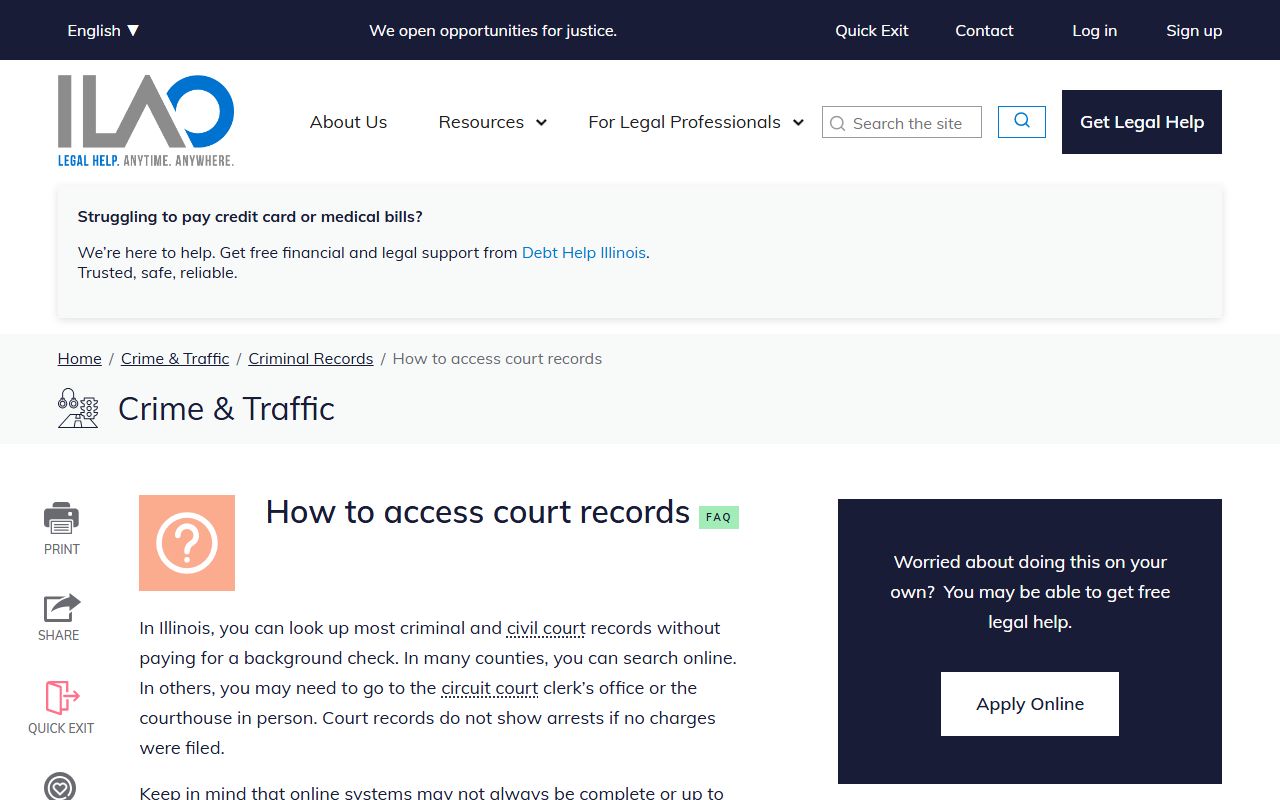
The guide notes that online systems may not always be complete or current and that you should go to the clerk's office for official certified copies of your divorce decree.
The Illinois Courts Manual on Recordkeeping sets the standards that all circuit court clerks must follow for storing, retaining, and providing public access to court records, including divorce decree files in Illinois.
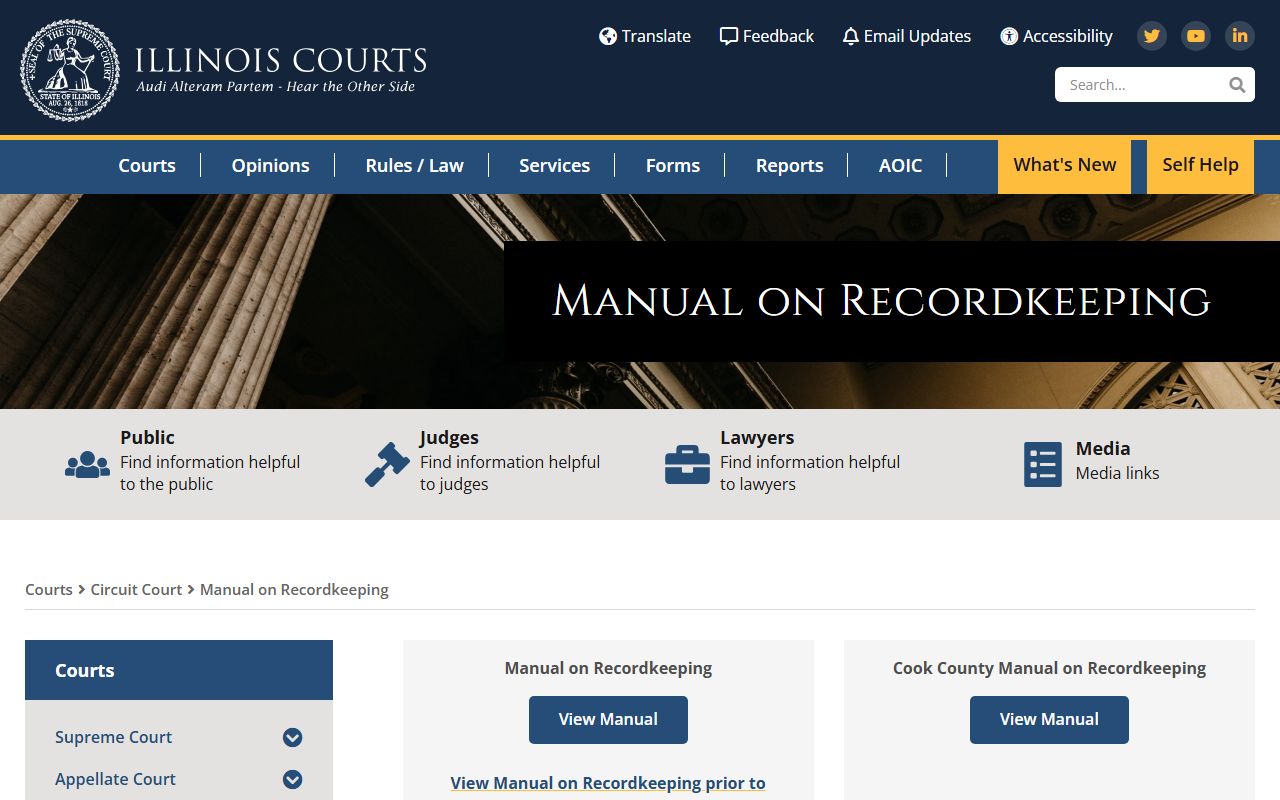
The manual covers retention schedules, digitization requirements, and the conditions under which the public may access and copy dissolution of marriage case records.
Illinois Legal Aid and Divorce Decree Resources
Illinois Legal Aid Online is the main free self-help resource for divorce in Illinois. It has plain-language guides covering how to start a dissolution of marriage case, which forms to use, and what to expect at each step of the process. The divorce section at illinoislegalaid.org covers property division, child custody, maintenance, and more. You do not need an account to use the site. It also has an easy-form tool that guides you through completing the required court forms for an Illinois dissolution of marriage case.
The Illinois Legal Aid Online divorce section covers the full process for filing and completing a dissolution of marriage case in Illinois, from the initial petition through the final divorce decree.
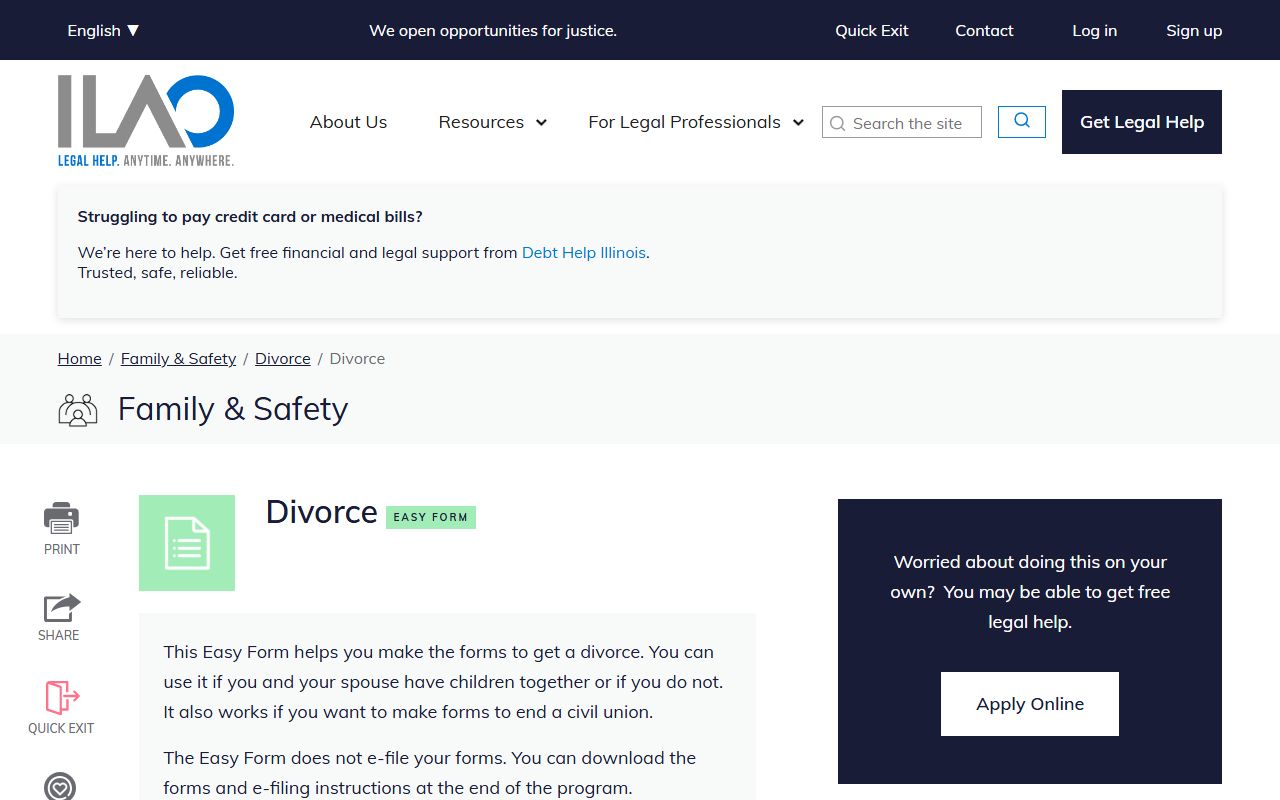
The site offers guides in plain English for people who are filing for divorce on their own without a lawyer in Illinois courts.
The Illinois Courts website at illinoiscourts.gov has standardized forms approved for use in all Illinois circuit courts. These include the Petition for Dissolution of Marriage, Summons, Financial Affidavit, and other documents required for a complete filing. All forms are free to download and print. The site also lists the Administrative Office of the Illinois Courts as the central body that oversees all circuit courts in the state.
The Illinois Courts official site provides access to circuit court clerk directories, approved divorce forms, e-filing guidance, and procedural information for dissolution of marriage cases statewide.
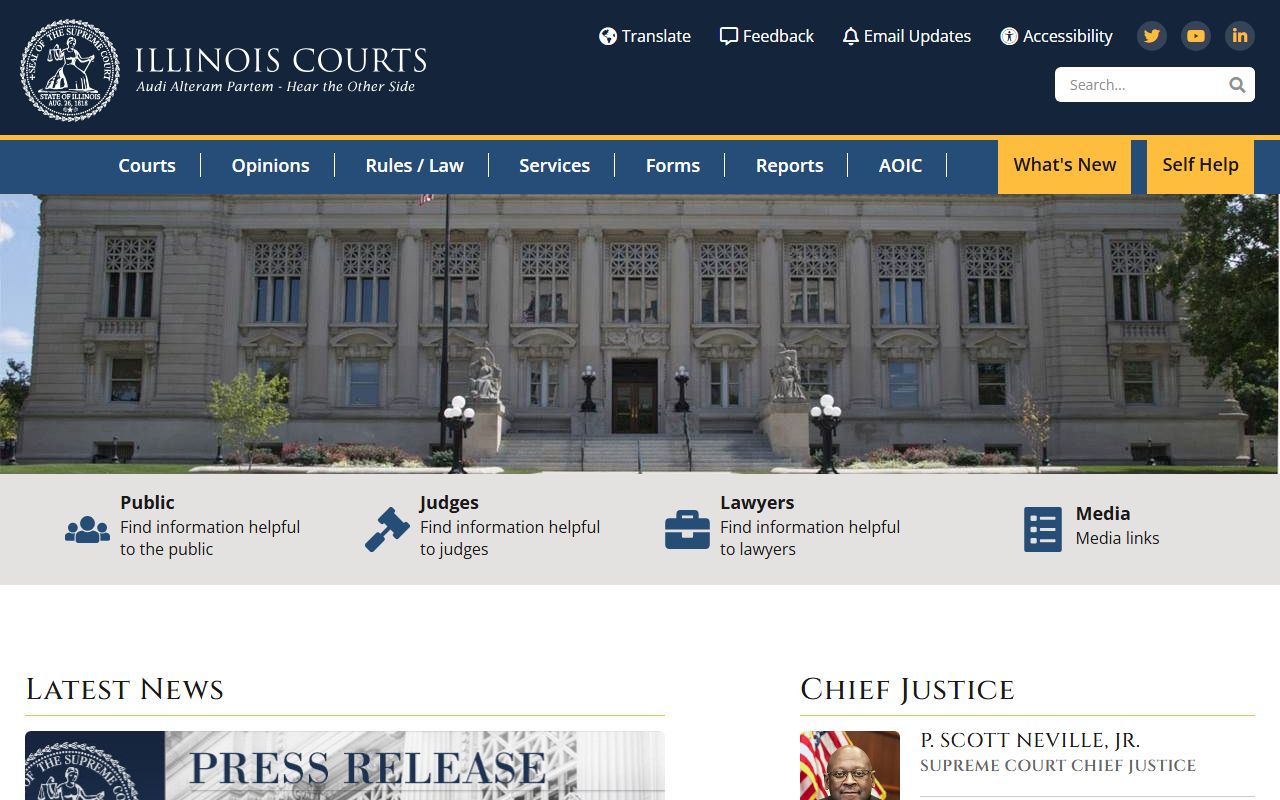
The Administrative Office of the Illinois Courts manages this site and keeps clerk contact information, forms, and procedural guides current for all 102 counties.
The Illinois Courts divorce forms page has every standardized form approved for dissolution of marriage, child support, and maintenance cases in Illinois circuit courts.
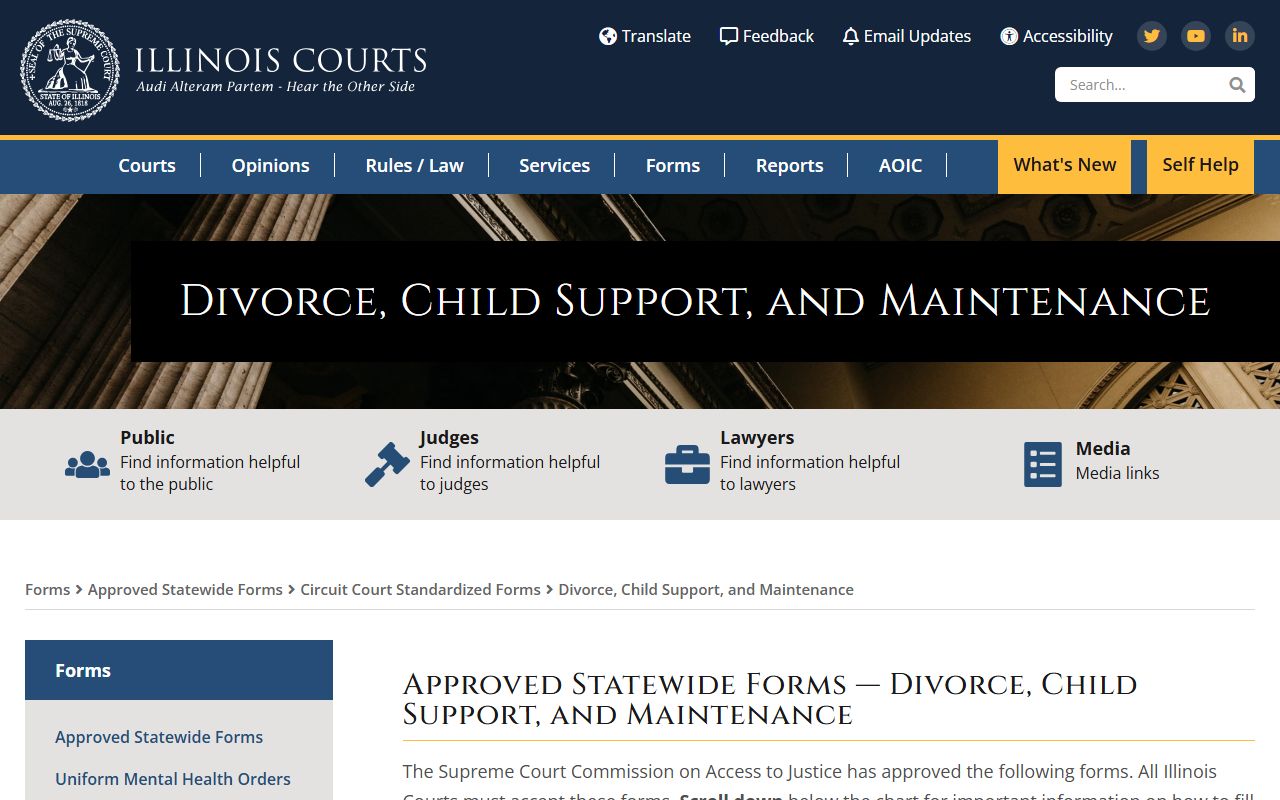
These forms are required for all divorce filings in Illinois and are approved for use in every circuit court in the state.
Public Access to Illinois Divorce Records
Illinois divorce records are public records. You do not need to be a party to the case to request a divorce decree or other papers from the case file. The courts operate on a principle of open access to civil proceedings and records. You can view records in person at the courthouse, search available online databases, or request copies by mail. Some older records exist only in paper form or on microfilm and may take longer to locate or reproduce.
Some portions of divorce case files may be restricted. Details about minor children are often redacted in public copies. Financial account numbers are typically blacked out as well. A judge can seal a divorce record if a party shows a compelling reason, but sealed dissolution records are rare in Illinois. Standard divorce decrees remain open to anyone who asks.
The Illinois Circuit Court Clerks directory lists all 102 county clerks organized by judicial district and circuit, with addresses, phone numbers, and fax numbers for each office.
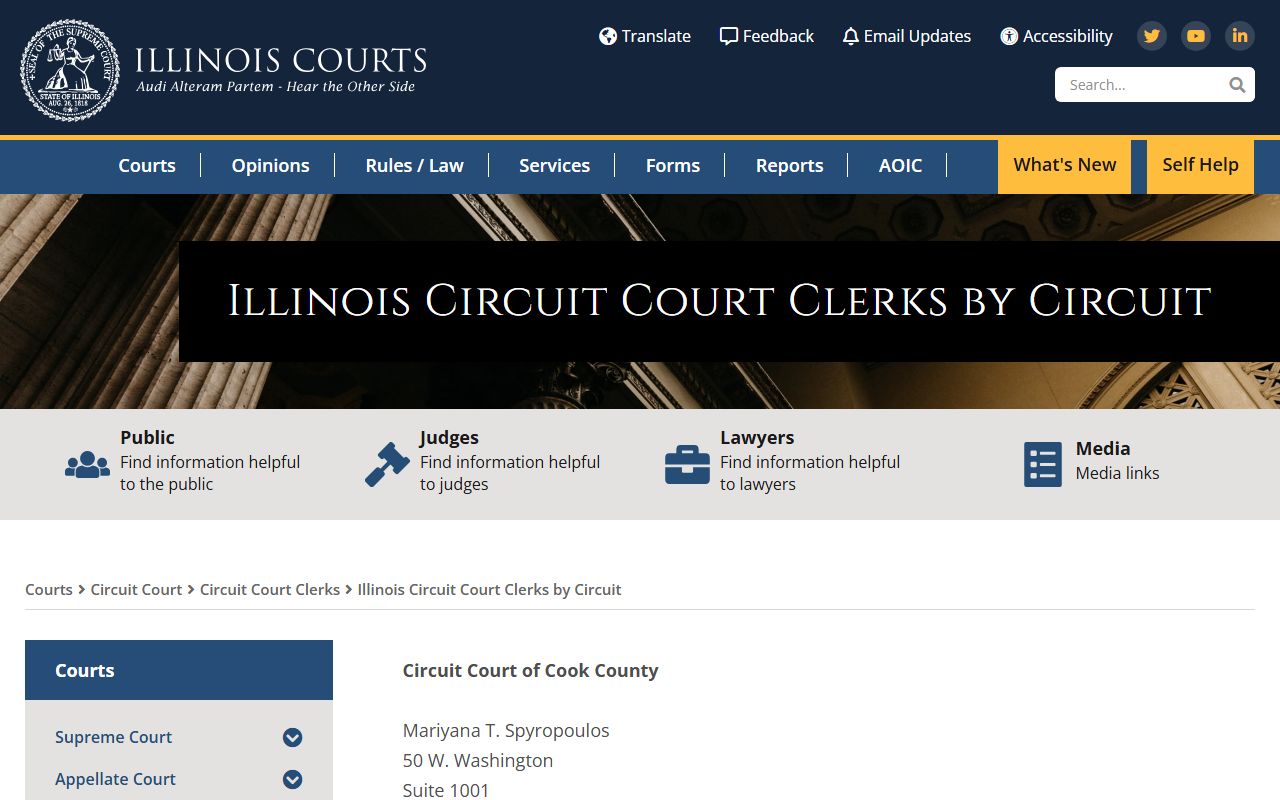
The directory is organized by judicial circuit and updated when clerk information changes, making it the most reliable source for current contact information.
If you are not sure which county handled a divorce case, the directory lets you quickly contact each clerk in a region to find the right office. Many clerks can do a quick name search over the phone to confirm whether a case is in their records. Once you find the right county, you can request copies of the divorce decree in person, by mail, or through a representative. Some counties also accept requests by email.
The Illinois Courts circuit clerk directory gives a single-page listing of all circuit court clerks in Illinois with their current contact information.
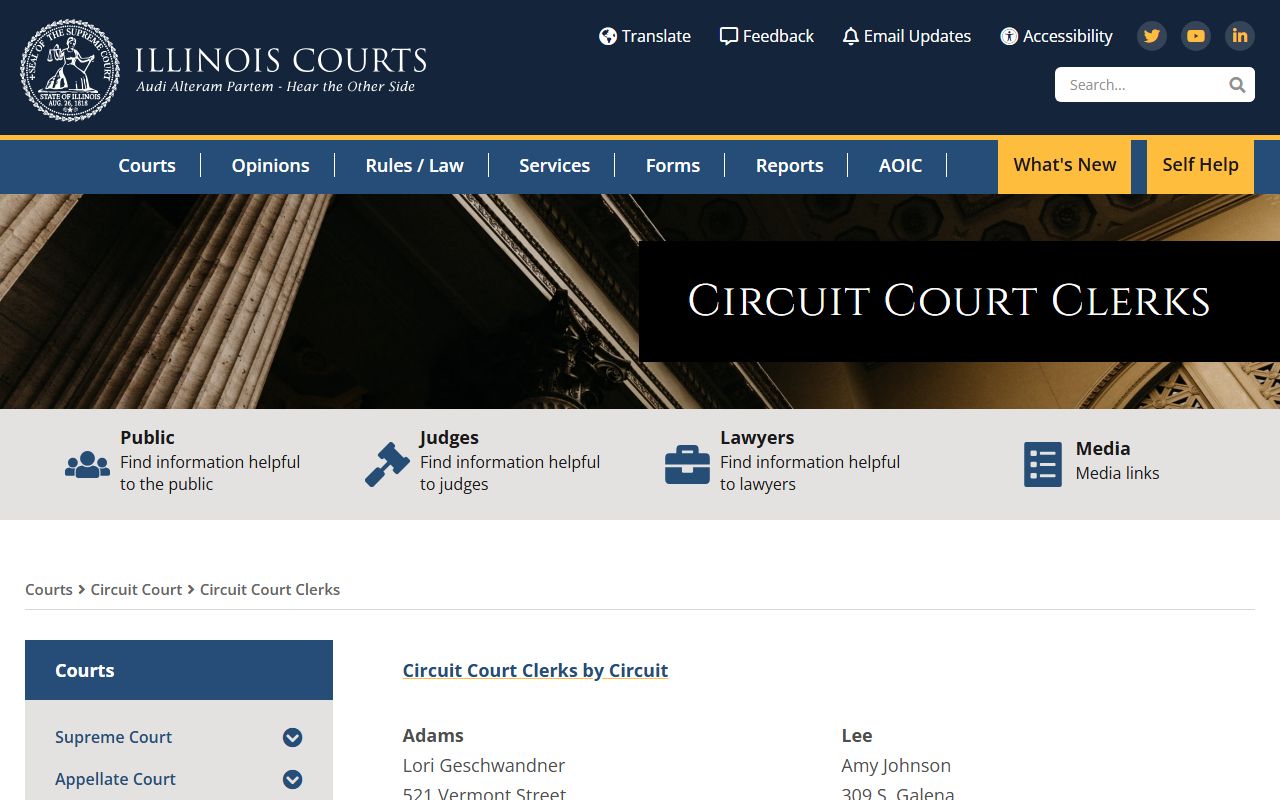
Use this directory alongside online search tools like Judici.com to track down the exact county and clerk for any Illinois dissolution of marriage case.
Browse Illinois Divorce Decree Records by County
Every county in Illinois has a Circuit Court Clerk who keeps divorce decree and dissolution of marriage records. Pick a county below to find local clerk contact details and resources for that area.
View All 87 Illinois Counties →
Divorce Decree Records in Major Illinois Cities
Illinois city residents file for divorce at the circuit court for their county. Pick a city below to find the courthouse, clerk contact info, and local resources for dissolution of marriage records.